Wednesday, January 13, 2021

Focacceria Vasteddi Arancini Sfincione Sicilian Pizza recipes


Screen Shot 2018-03-03 at 1.47.32 PM.png

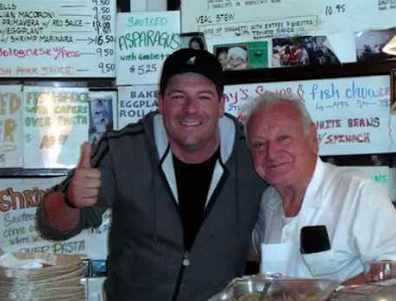
That's VINNY on The Left

with One of His Many FANS

La Foccaceria? Oh where have you gone? Well, I do know actually. After more than 90 years in business, it was time to close the doors. And a sad day it was for thousands, including me. I first moved into the East Village in November 1982 .. I was working in another famed old New York Italian institution in The East Village, in John's (Since 1908) on East 12th Street right around the block from La Foccaceria. La Foccaceria was a great little Sicilian Specialties restaurant on 1st Avenue between East 11th and East 12th Streets on the east side of First Avenue .. That was  the first spot where Vinny's father opened the doors in 1914 ... I'm sorry to say, I never went to that one but to it's (La Foccaceria) 2nd location a couple blocks south on 1st Avenue between East 7th Street and St.  Marks Place (E. 8th Street) on the east side of the avenue. The new La Foccaceria, run by one Vinny Bondi was just one block from my apartment at the corner of Avenue A and St. Marks Place. In 1982 the East Village was on an up-swing in popularity and improvement from a sort of sub-ghetto of The Lower East Side. the neighborhood which was strongly Eastern European; Ukranian and Polish, mixed with Hispanics, Italians, and people of Jewish persuasion. When Mr. Bondi opened the doors almost 100 years before when the neighborhood was largely made up of Sicilian immigrants which included one Charles "Luck" Luciano whose parents moved to East 10th Street when Luciano was just 9 years old. In the early 80s when i first moved into East Village it was a low-rent neighborhood with apartments that were relatively cheap for the city, thus attracting artists, so-called wannabe actors and musicians and young people who wanted to live in Manhattan. In the East Village they could find an apartment (though not the best physically) at reasonable rates for the time, I did. Through a friend I was able to procure a 2 bedroom apartment for a mere $400 a month. Quite a bargain. I shared the apartment with my good friend jay F. for the first year in that apartment. Once he moved out, I kept the apartment for myself.

   Hey, I'm getting off the beaten track. Yes back in 82 the East Village was an exciting and changing neighborhood, perfect for me and other young people just starting out in this great city of ours.

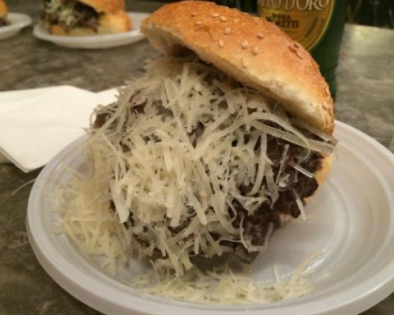
    I was only paying $400 rent and had money to spend eating out. I used to eat at a Ukrainian Diner Odessa on Avenue A and Lesko's as well, two doors down from Odessa. There I could get plates of home-made Perogis, fresh Keilbasi and other solid food for cheap. In the East Village there were a few old-school Italian holdovers like; John's were I was working as a waiter & bartender at the time, Lanza's (now over 100 Years old), De Roberta's Italian Pastry (over 100 years old) Brunetta a great little Italian restaurant I used to go to which was on the same block as the original La Foccaceria and there was the current La Foccaceria on 1st Ave near Saint Marks Place .. I went in to La Foccaceria one  day, I met Vinny and I loved it from the very start. Vinny's father and mother had started the place way back in 1914 ... Vinny, I never asked his age, but he must have been in his late 60's at the time (1983). La Foccaceria served an array of wonderful dishes; all the usual pastas like; Lasagna, Spaghetti & Meatballs, Spaghetti Vongole (Clam Sauce), and Sicilian Maccheroni, like Pasta con Sardi and Lasagna Coccati, broken pieces of lasagna pasta baked with sausage,peas, tomato, and mozzarella. Vinny had great soups like Pasta Fagioli and the best Lentil & Escarole Soup around. He sold sandwiches like Chicken Parmigiano, Meatball Parm, Sausage & Peppers, and his most famous dish of all, the famed Vastedda Sandwich of Palermo. A Vastedda (Vastedde) Sandwich as we've said is a very famous sandwich that is a specialty in Palermo, is made with Beef Spleen (or Veal) with Ricotta and Cacciocavallo Cheese on a small Sesame Seeded Bun. It is quite wonderful and was a specialty of the house at Vinny's La Foccaceria. I just loved it, and at $1.60 per, even in 1982 it was one of New York's great prepared food bargains. The average price of most sandwiches  back then was about $5.00 around town, so  a Vasteddeat $1.60 per? Wow, what a Bargain?

I had tried most of the dishes at La Foccaceria in my first year eating there, but there was one that I loved by far most of all. Yes, the Vastedde. Most times I would have a Vastedde and a bowl of Vinny's wonderful Lentil & Escarole Soup, the best I have ever had. If it was Thursday or Saturday, the days that Vinny made Arancini (Sicilian Rice Balls) and Sfingione (True Sicilian Pizza), I might get a piece of Sfingione and Lentil & Escarole Soup, or Sfingione, a Vastedde, and Soup. Yeah! 

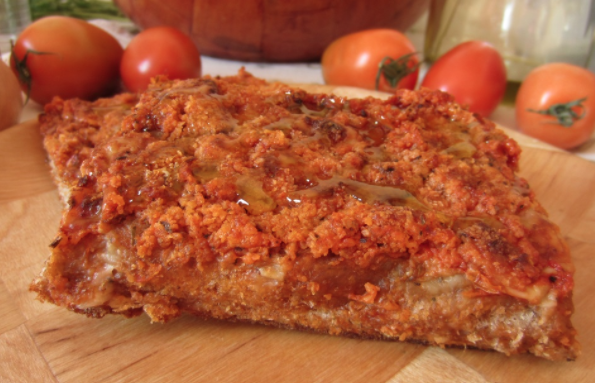
I often ate at Vinny's on Thursdays and Saturdays, as they were the two days in the week when Vinny made Sfingione, which is real Sicilian Pizza, that comes from Palermo. This type of pizza is made in a pan and is thick just like what is know as Sicilian Pizza all over America, and has tomato and Mozzarella Cheese baked on top. Sfingione on the other had doesn't have tomato or mozzarella, but minced Anchovies that are suteed with onions and breadcrumbs. This breadcrumb mixture covers the dough and then is backed in the oven, and "Voila," you've got the true Sicilian Pizza known to Sicilians and Sicilian-Americans alike as Sfingione. 

Very made a great version of Sfingione, and I'd get a piece of it every week for the 11 years before I moved over to the west side in Greenwich Village. Saturdays was a very special day at La Focacceria as that the day that all the old guys who grew up in this neighborhood, but later bought homes outside of Manhattan, Saturday was the day many of these guys would take a ride into the hood to get a Vastedde, see Vinny and habg out with old friends, one coming from Staten Island, one from Brooklyn, one from Jersey, etc., etc., and they'd all meat up at Vinny's for a nice lunch together and remember their old times in this old Sicilian Neighborhood.

Boy did I love Vinny's. There was nothing like those Vastedde and Vinny making them. Vinny had a special stattion at a counter up front of the place where he cut the cooked Beef Spleen, fry it in lard, cut the bun, cut some Cacciocavallo, he'd lay the spleen on the bun, add some Ricotta, and sprinkle the cut Cacciocavallo Cheese over the top. Yumm! And I'd have a little chat with Vinny as he made my Vastedde right before my eyes. When i ordered it, all I had to say to Vinny, was, "One with everything." That meant everything; the spleen, Ricotta and Cacciocavallo. Some people would order them minus the spleen. Why? Amateurs.

Sadly, Vinny closed his Foccaceria a few years ago. it was a sad day for me, no more Vinny, no more La Foccaceria, no more Vastedde.

Ode to La Foccaceria Ode to My Pal Vinny Ode to My Beloved Vasteddi I Will Miss You All So   Daniel Bellino-Zwicke  

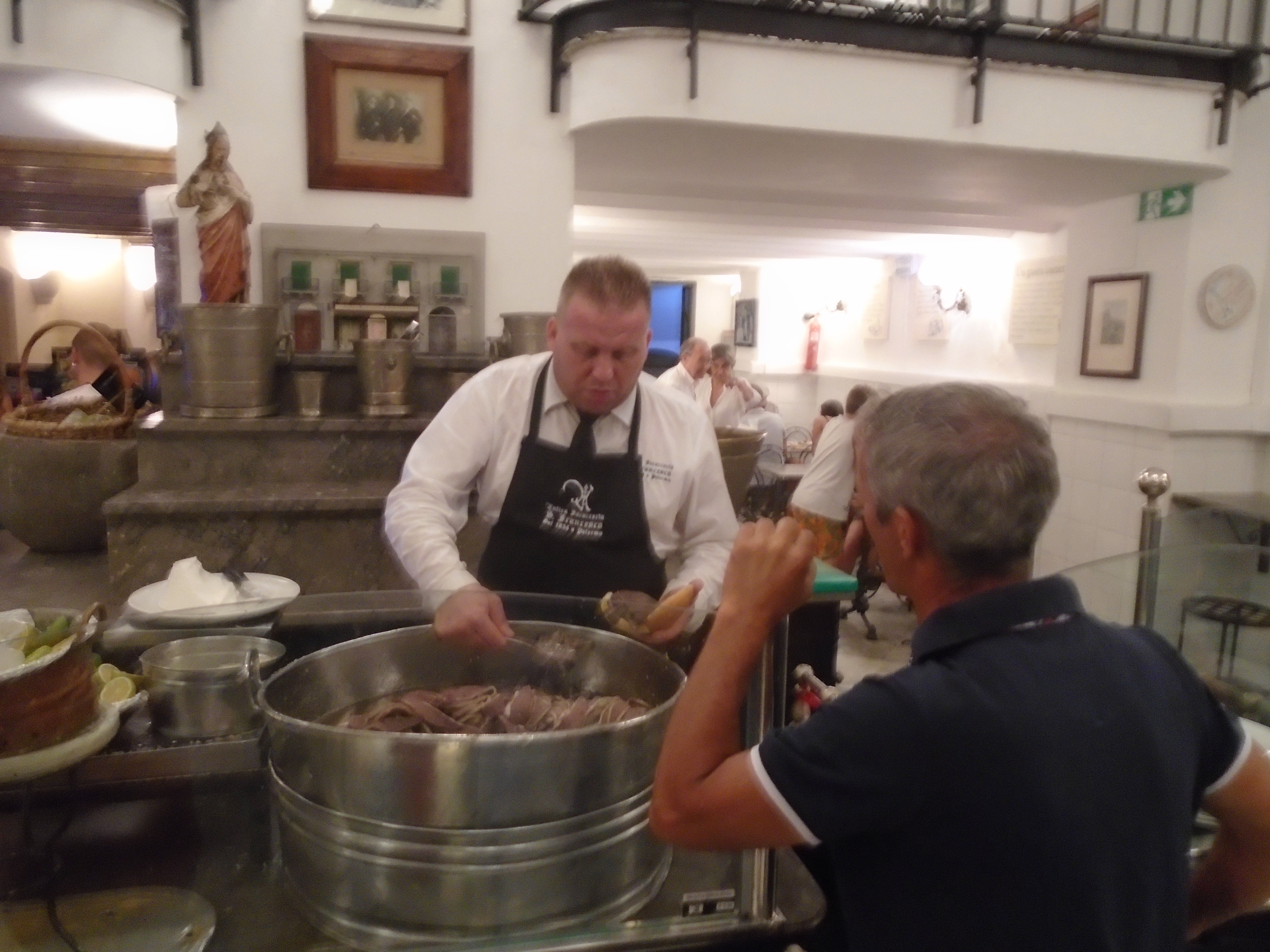
NOTE : In Palermo where the Vastedde Sandwich comes from, it is mostly known as Pane Milza (Muesa), which translates to "Bread and Spleen." The spleen is first simmer to cook in gently boiling water until cooked through. The spleen is cooled down and refrigerated to cook later. When someone orders a sandwich, Vinny would take the large piece of Spleen, cut thin slices of it and fry them in lard that was in a pan at the counter of the focacceria. Vinny would then place the cooked spleen on a sesame seed bun that was split in half. He'd place a dollop of fresh Ricotta on top of the spleen, then grated Caciocavalo Cheese over the ricotta, and then top with the top piece of bread and place the Vastedde Sandwich on a plate and hand it to the lucky recipient, like me, just like they make it in Palermo.

NOTE II : You may have noticed different spellings for the same sandwich, Vastedde and Vastedda are both singular, while Vasteddi is the plural for more than 1 Vastedde.  
Screen Shot 2018-03-03 at 1.54.13 PM.png

The FAMED VASTEDDA

"I ate these at Vinny's twice a week. La Focacceria was just 1 block from my apartment in the East Village. Sadly Vinny closed about 8 years ago. Now I have to go all the way to Ferdinando's in Carroll Gardens, Brooklyn to get one. Either there are all the way to Palermo to Antica Focacceria S. Francesco, which I don't mind at all, but I sure do miss going to La Focacceria on 1st Avenue, seeing my old buddy Vinny, eating a Vasteddi, an Arancini or some Sfincione which Vinny made on Thursdays and Saturday. The BEst Vasteddi in New York.

.
Screen Shot 2018-03-03 at 1.50.08 PM.png

SFINGCIONE

This is real SICILIAN PIZZA. Vinny made it on Thursdays and Saturdays and all the guys that used to live in the neighborhood but bought homes in Brooklyn, Staten Island or where ever, they'd come in to La Focacceria every Saturday for a VASTEDDA and some SFINCIONE and ARANCINI. It was quite a place.

.
Screen Shot 2018-03-03 at 2.09.16 PM.png

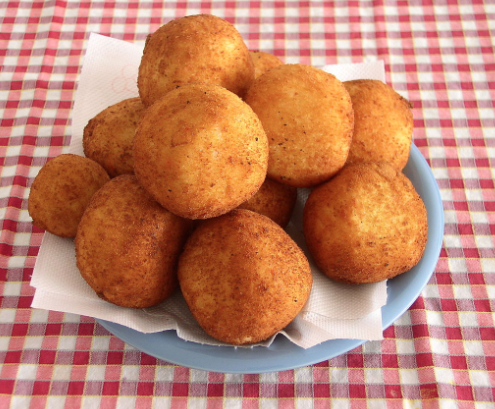
ARANCINI

Like any good Focacceria, Vinny made great ARANCINI too. You can find incredible tasty ARANCIN (Rice Balls) where ever you go in SICILY, stuffed with meat or cheese, they're as tasty as can be, and at just about $1.50 a piece, a nice inexpensive treat and the perfect thing to eat between meals, or even a meal in themselves, two will do the trick.

.
a4ce8-screen2bshot2b2016-09-032bat2b3-22-552bpm

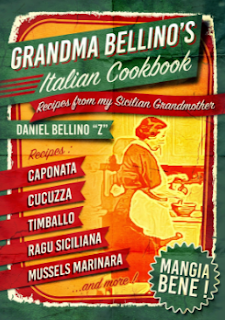
ARANCINI RECIPE

GRANDMA BELLINO'S COOKBOOK

RECIPES FROM MY SICILIAN NONNA

FerdinandosCannoliMazzolasT-REX 029

Ferdninado's In Brooklyn.

You Can Still get a good Vastedda There ...

Sadly, the only place left in New York

Image

Read About VINNY'S La FOCCACERIA

in Daniel Bellin o's "La TAVOLA" ITALIAN-AMERICAN    NEW YORK .....
 

DSC03762

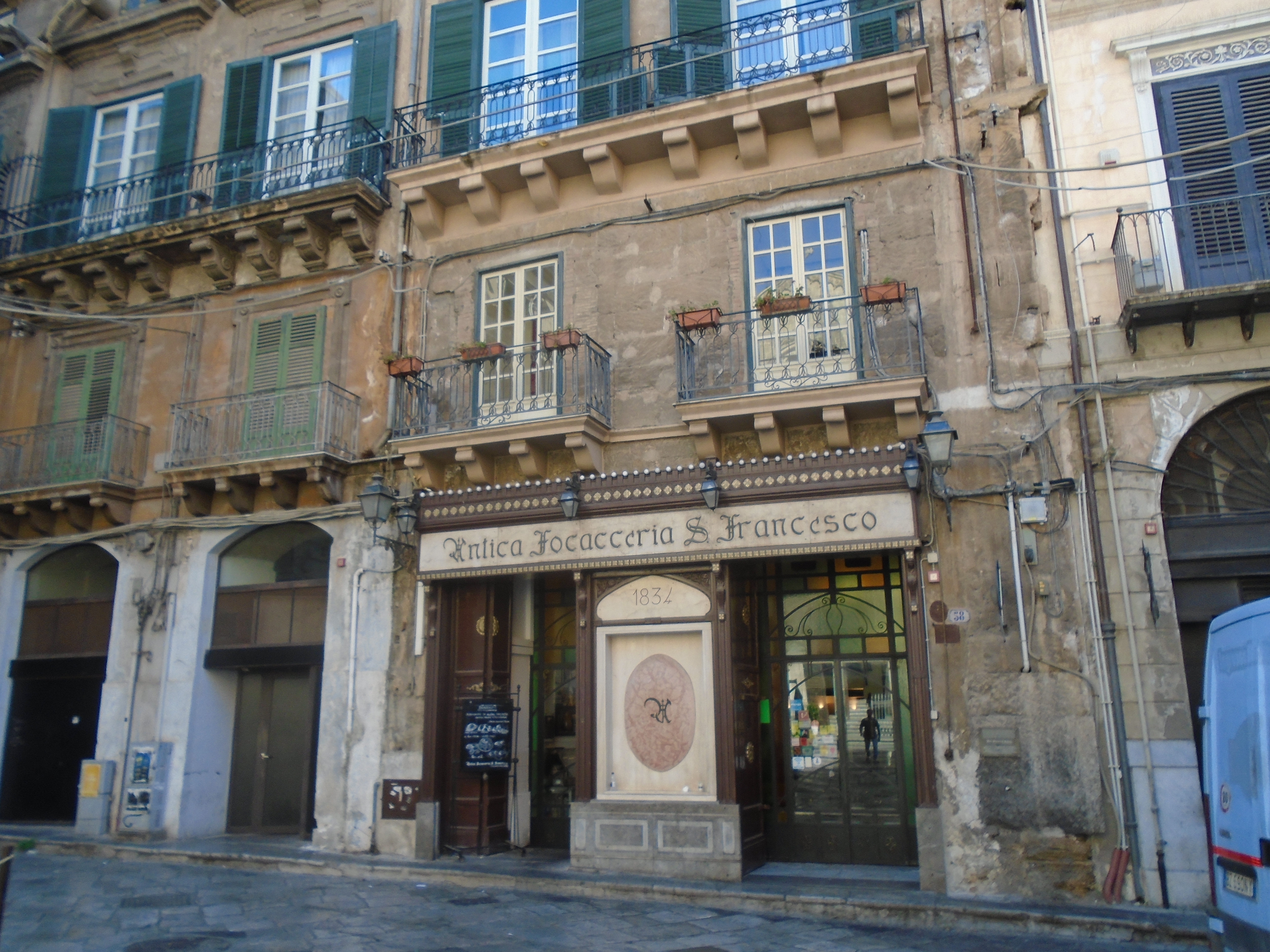
Antica Focacceria San Francesco

PALERMO

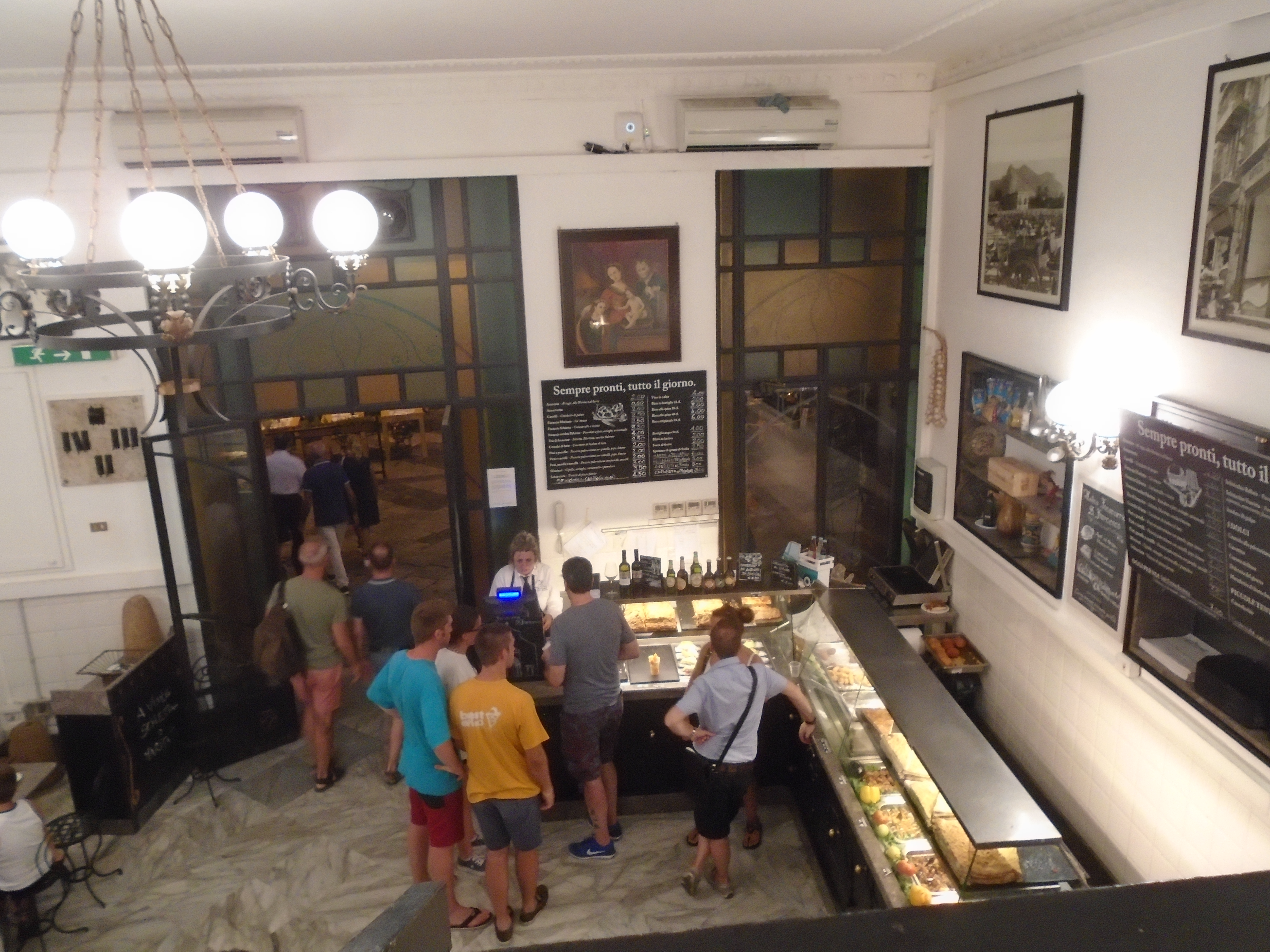
The Antica Focacceria San Francesco is without question the most famous focacceria as well as the single most famous and popular place to eat in all of Palermo, and all of Sicily for that matter. This may very well be the place where Mr. Bondi (Vinny's Father) modeled his place La Focacceria 1st Avenue after. We can't really be sure, but it's our guest bet. And for certain there must have been many different focaccerias all over Palermo when Mr. Bondi was a young man, that no longer exist, so he may have modeled his establishment in New York after one of those that no longer iexist, and yes, then-again, it may have been Focacceria San Francesco.

Anyway, the Focacceria San Francesco is without question my absolute favorite place to eat in Palermo, nothing comes close to this place, it's absolutely and positively awesome. The ambiance is spectacular with its balcony, marble and granite counters, floor, and tabletops. And the food? The Food is Wonderful! The worlds best place to get Pane Milza (Beef Spleen Sandwich), Caponata and Arancini (Sicilian Rice Balls).

La Focacceria were made famous by Andrew Zimmer on Bizarre Foods, and even more famous by Anthony Bourdain on "No Reservations, but I started going there way before those two guys.  Yes the food is wonderful, and just as wonderful are the prices, which are cheap to say the least. And the fact that they make a wonderful plate of their Greatest Hits, which includes Caponata, Aracini (Rice Balls) Panelle (Chickpea Fritters), and of course the famous sandwich Pane Milza (Muesa).  
DSC03796.JPG

Making a VASTEDDE

aka Pane Muesa


DSC03801.JPG

My VASTEDDE


DSC03803.JPG

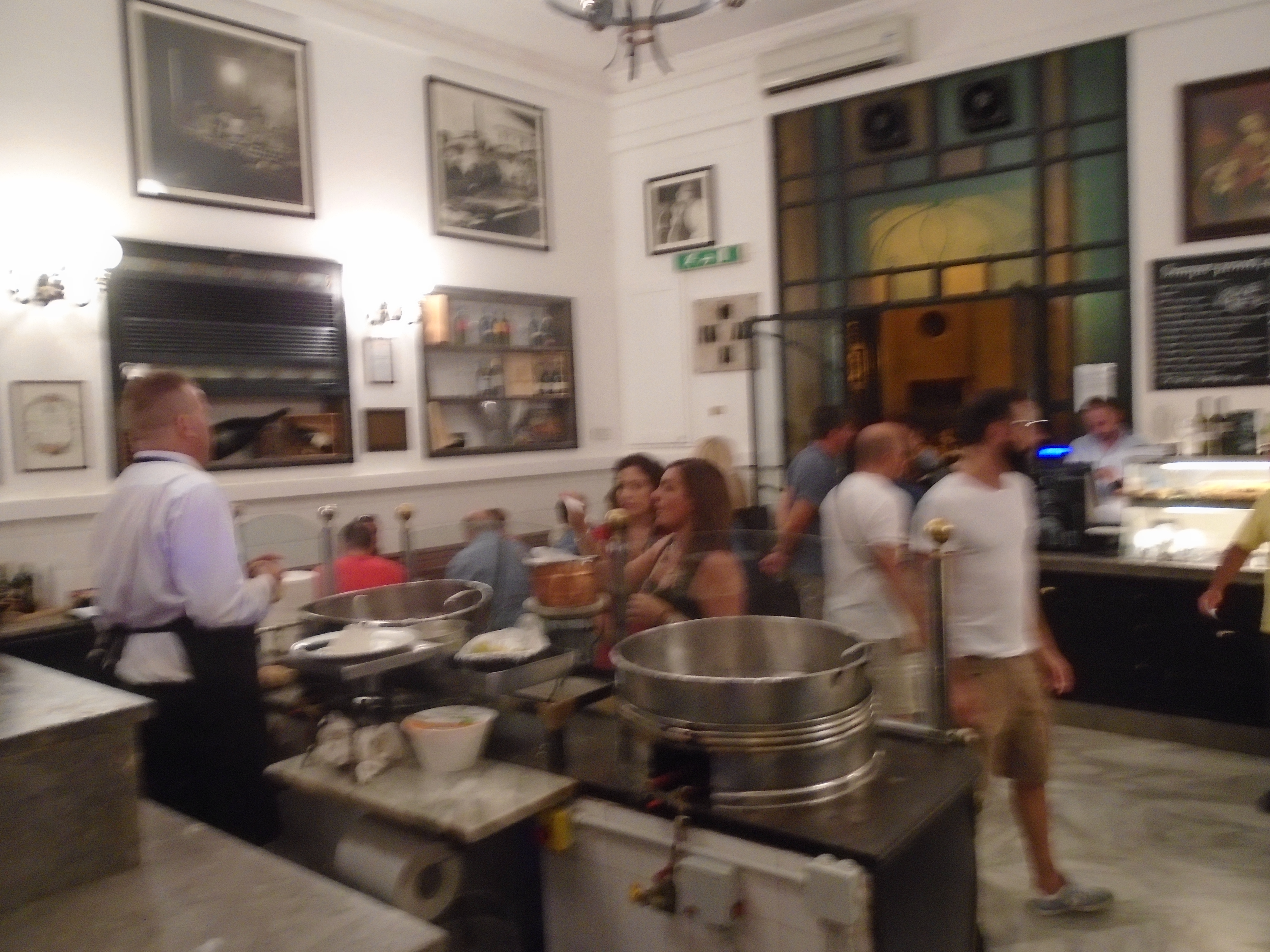
Inside S. Francesco

FOCACCERIA

PALERMO
 

DSC03761.JPG

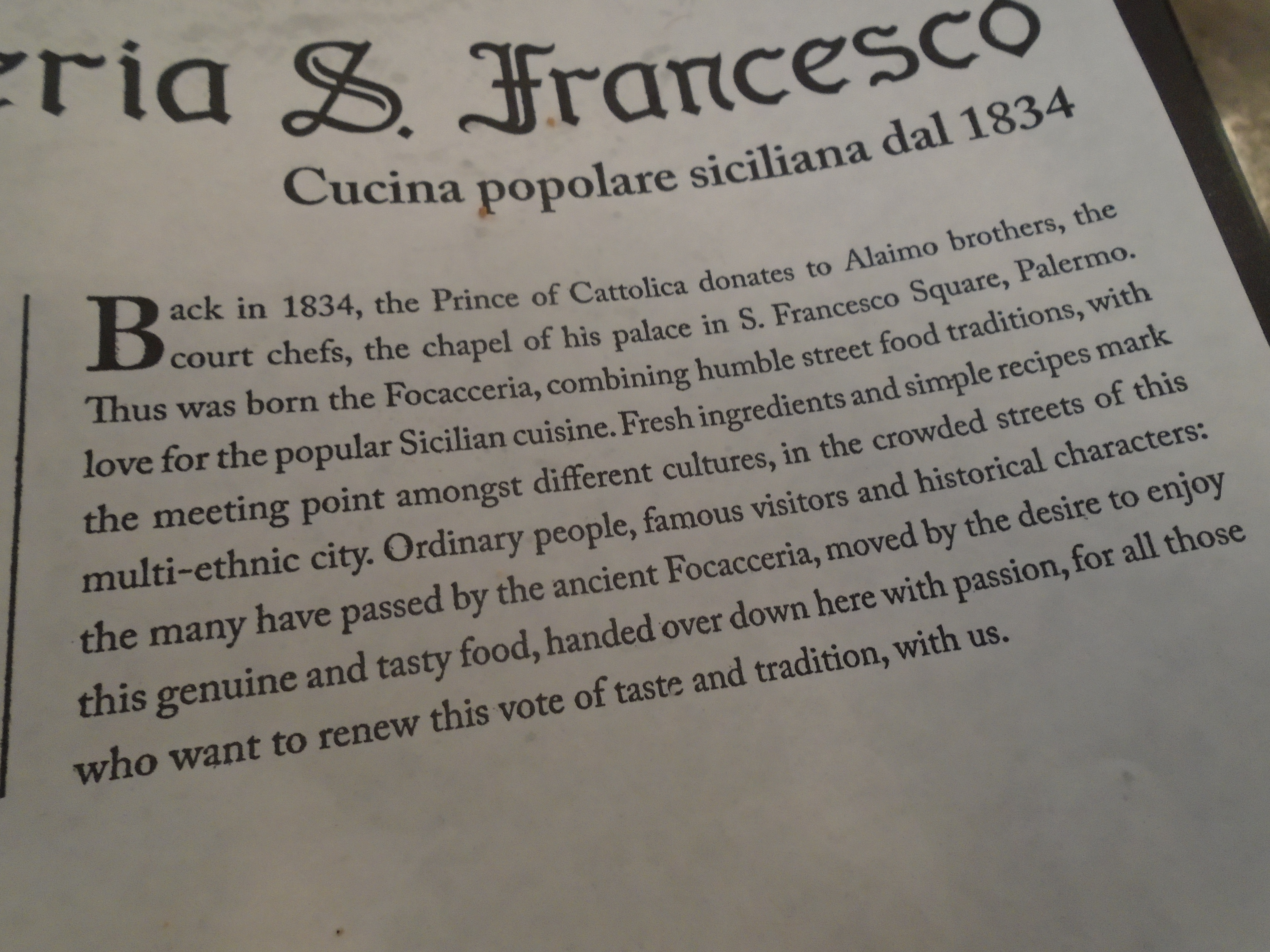
Read This !

Focacceria San Franceso and the Street Food of Palermo, Sicily #StreetFood

#PalermoStreetFood
   

DSC03807.JPG

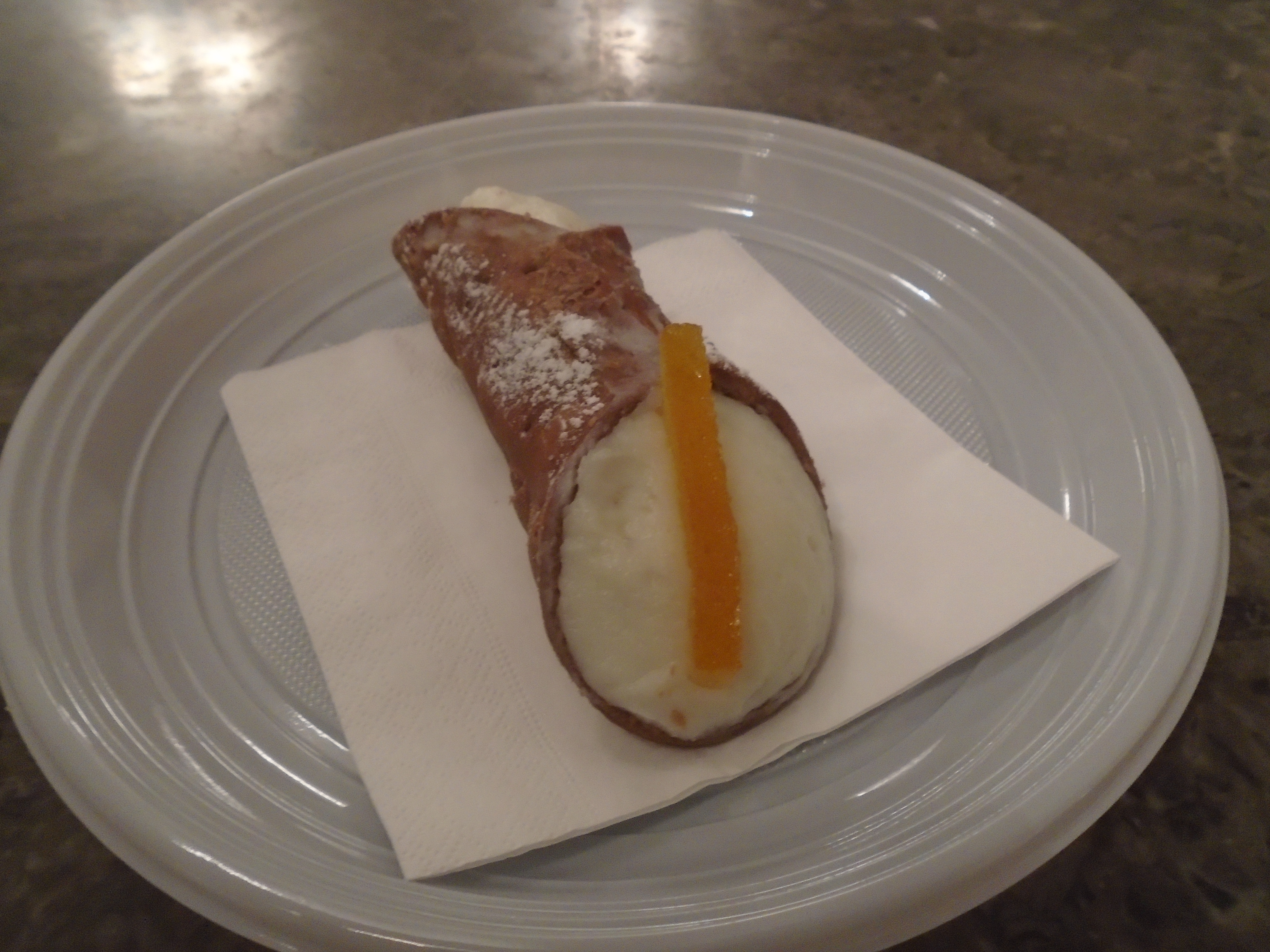
My CANNOLO

Focacceria S. Franceso

2017
   

DSC03805

Antica Focacceria San Francesco

PALERMO

  .       .        

Saturday, December 26, 2020

You bother Me about Fucking Steak


"Don't overcook it. You overcook it, it defeats its own purpose."


"ALRIGHT Alright." !!!


The Cheese Grater

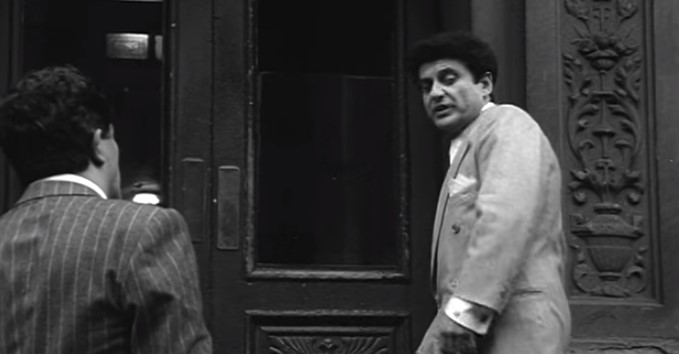
(When I was a Child, we always had a hunk of Pecorino and we grated it on a Box Grater over our Maccheroni, as Robert DeNiro Does here in Martin Scorsese s RAGING BULL  RECIPES .  )


"YOU BOTHER ME ABOUT a FUCKING STEAK" ???

From Martin Scorsese 's RAGING BULL


Starring : ROBERT DeNIRO and JOE PESCI

With : FRANK VINCENT


What are you Doing? I said don't Overcook It."


Cooking the Steak and Fuming Inside


"Don't overcook it. You overcook it, it Defeats its own purpose."


"You want your Steak?"


"It's like a piece of Charcoal."

"BRING IT OVERrrrrr!!"


"You WANT Your STEAK?" !!!


"Yeah! Bring it over."


"HERE'S Your STEAK" !


"Hey Salvi!"

"Go FUCK Youself"


"YOU BOTHER ME About a FUCKING STEAK ?" !!!!!


"You Call those CARROTS?" !!!


"You Ate them, Didn't You?"


"I Got No Choice"I GOT NO CHOICE" !!!!


"Who's an Animal?""Your Mothers an Animal, You SON of a BITCH" !!!!


"I'm gonna get that Dog, and I'm gonna Eat it for Breakfast."

You heat me Larry?"


SUNDAY SAUCE

RAGING BULL RECIPES


SUNDAY SAUCE is Available on AMAZON.com


Saturday, January 11, 2020

Parisi Bakery Deli The Dennis Sandwich


The DENNIS

PARISI BAKERY DELI

NEW YORK NY


The DENNIS

CHICKEN CUTLET with RPSOCIUTTO &  FRISH MOZZARELLA

FroM JOE'S DAIRY, on PARISI ITALIAN BREAD


"FRANK SINATRA'S FAVORITE ITALIAN BREAD"


Parisi Bakery is a NYC instution since 1903 and still making one of the best sandwiches on the planet. Pictured is the infamous "Dennis" with layers of perfectly fried chicken cutlet, proscuitto, mozzarella (mutz), tomatoes, balsmic, and an herb spread on a fantastic piece of Italian bread. Lunchtime will have long lines but worth the wait to try any of the Italian speciality sandwiches. 


SANDWICH MENU

PARISI DELI


COOKING ITALIAN

SECRET CREAMY ITALIAN SALAD DRESSING

And Other GREAT RECIPES


Wednesday, December 25, 2019

Chicken Cutlets Recipe


Chicken Cutlets alla Nonna
"Mangia Bene"


Watch the Video


HOW to MAKE CHICKEN CUTLETS

ITALIAN STYLE


Pollo Marengo

Lemon Chicken

Brooklyn Style Sunday Gravy

And More ...


Screenshot 2019-12-25 at 1.16.28 PM


Sunday, November 17, 2019

Sunday Sauce Bellino Lodi NJ JerseyStyle


The Cast of The GODFATHER

AL PACINO - MARLON BRANDO

JAMES CAAN - JOHN CAZALE


Watch and Listen to this Radio TV Commercial

For SUNDAY SAUCE alla CLEMENZA

all BELLINO from the motion picture, The GODFATHER

by FRANCIS FORD COPPOLA

Starring : AL PACINO , MARLON BRANDO, JAMES CANN,

JOHN CAZALE, ROBERT DUVALL

and RICHARD CASTELLANO as CLEMENZA

The RECIPE for this beloved ITALIAN-AMERICAN Favorite

SUNDAY SAUCE, which some call "GRAVY" and which Corleone Capo

Peter Clemenza show Michale Corleon (AL Pacino) how to make SAUCE

The RECIPE is in SUNDAY SAUCE

by BEST SELLING Cookbook Author Daniel Bellino "Z"

Available on AMAZON


SUNDAY SAUCE

LEARN HOW to MAKE
SUNDAY SAUCE alla CLEMENZA

MEATBALLS alla SINATRA

PASTA FAGIOLI

and More ..


.


Watch The BELLINO'S Make SUNDAY SAUCE

In LODI, NEW JERSEY

Saturday, July 13, 2019

Sams Italian Cuisine Brooklyn


SAM'S

STEAKS / CHOPS

ITALIAN CUISINE


SAM'S RESTAURANT

Court Street

CARROLL GARDENS

BROOKLYN


Inside SAMS'S RESTAURANT

BROOKLYN

NEW YORK


GRANDMA BELLINO

SICILIAN and ITALIAN


.


Guffanti Old New York Italian Restaurant NYC


GUFFANTI'S

2nd Restaurant

161 West 40th Street


In 1892 when Joseph Guffanti leased the store for his saloon.  What made his tavern slightly different, and what would change his future forever, was the little room in the back where patrons could purchase lunch or dinner.

On July 1, 1900 The New York Times described Guffanti's saloon, saying, "The room in which liquid refreshments are served opens on the street and is like most other saloons of the neighborhood, except that it is a little more dingy and dark.  But the restaurant, entered by the saloon's back door, is unique, for nobody else knows how to concoct the strange dishes that are prepared there, and Joe never loans out his receipts for cookery."

It was not Joe's wife, Mary, who did the cooking, but Joe himself.  He opened the kitchen during specified lunch and dinner hours.  In the eight years he had operated by the time of the Times article, word had gotten out.  "The stroke of the clock seems to fill the six or eight small tables like magic."

But in 1900 Guffanti's was by any description still more saloon than restaurant, and its patrons mostly working class.  "In the centre of the dining room are a couple of pool tables, designed not for the acquirement of revenue but for the amusement of guests who happen to come in a few minutes ahead of eating time."  

But the article did hint of things to come.  Guffanti's authentic Italian cuisine was drawing more affluent patrons who bypassed the bar and headed straight for the back room.  "Italians naturally predominate, but they are of the more prosperous class and are almost all well dressed.  Then there are business men of the neighborhood, who like Joe's food better than what they can get at home; men-about-town, whose appetites have grown satiated with the elaborate viands of restaurants more 'swell': reporters, detectives, actors, and a variety of other wanderers for whom the odor of Signor Guffanti's soup has a pleasant charm."

Joe Guffanti had yet to realize the potential of his cooking.  The article noted that the walls of the restaurant room were unpainted and the furniture was "well nigh ready to fall to pieces."  But that would change before long.

Born in Lake Como, Italy, Guffanti had come to America alone while still a boy.  He and his wife Mary (who was Irish) had five children, Joe, Jr., Irene, Alexander, Madeline, and Frances.

A few months before The Times article, Joseph had decided to go back to his homeland.  It had been, after all, decades since he had seen his mother and brothers.  He booked a steerage ticket and turned the saloon over to a trusted employee.  He anticipated the trip would last two or three months.  It did not.

Three weeks later he was back in the saloon.  He explained "I thought I'd have a mighty fine time, but when I got home the guys around there knew I was an American by the cut of my trousers.  So they pulled my leg and tried to work bunko games on me and played hell with me generally.  I couldn't stay in the country--couldn't stand it--that was all there was to it."  As for his family, "I was glad to see the old woman, but my brothers wouldn't have anything to do with me.  When I got there it was early in the morning.  Before noon I was packing up my valise, and that night I pulled out.  No. Sir!  I'll never go back again.  An American can't stand it over there."

In 1902 Morris Abrahams purchased No. 272 (it had housed a barber shop for years).  He now owned all three of the 20-foot wide buildings and soon connected the upper floors internally as a hotel--albeit not an especially high class operation.  His son, Mark, hired architect Joseph Kelly to make "improvements on the 4-story hotel," now using the single address of 274 Seventh Avenue, in May 1907.

The following year, in June, Joseph Guffanti expanded.  By now he had realized that his fortune was not in running a saloon, but a restaurant.  When he renewed his lease on No. 274, he leased No. 272 as well.  The Real Estate Record & Builders' Guide noted "permission given under terms of lease to connect."  Within three years Guffanti's Restaurant would engulf all three storefronts.

Author Helen Bartlett Bridgman described the restaurant in 1920 as it was around that time of the expansion.  "Guffanti's was then a modest restaurant in an unfashionable quarter of Manhattan...For half a dollar in the early days of this century, one had quite enough, but not too much for twice as much.  Every dish then as now was delicious; but judgment in quantity as well as quality was in evidence.

"The pace was set by the crisp freshness of the onions and radishes, served with sardines and anchovies, as a snappy prelude to a heaping platter of the best spaghetti that ever was, enriched by a red sauce that cannot be surpassed in Italy itself."

She went on to describe the sauce as being prepared with "tomato paste, chicken livers, peppers green and red, onion, oil, lemon and spices" and called the minestrone "almost a full meal."

In 1910 the New York Hotel Record described Guffanti's as "Famous for Table d'Hote dinners, serving from 900 to 1,500 dinners daily in typical Italian style, with music."  Joseph Guffanti had made it.


ORIGINAL GUFFANTI'S on 7th Avenue at 29th Street

Old Postcard of GUFFANTI'S

New York, NY


The music the Hotel Record had mentioned were singing mandolin players.  In her 1920 book Within My Horizon Helen Bartlett Bridgman remembered a visit years earlier. "By and by one of the mandolin players...rose and sang in a remarkably good baritone, walking back and forth as he did so, while his companion joined with zest in the chorus, giving 'O Santa Lucia' with a yearn in the prolonged 'O' and a tender pride in the 'Lucia' which I have never known before or since."

She commented "Guffanti must be a millionaire by now," recalling that years earlier, "Every seat was filled, with many waiting; for the public knows a good thing when it sees it."

When Joseph Guffanti had first opened his saloon and restaurant Manhattan's theater and entertainment district was located just three blocks south, on 23rd Street.  The New York Times decades later remembered the entertainers who haunted the restaurant.  "Enrico Caruso sang there many times to patrons including John Barrymore Alfred E. Smith, Diamond Jim Brady, Lillian Russell and John Philip Sousa."

As the theaters moved north to Times Square, Guffanti responded by opening a second restaurant at 161 West 40th Street.   Additionally, he established the Guffanti Inn on Ocean parkway in Coney Island.


On September 8, 1919 the New-York Tribune reported on an afternoon event that day.  "Meeting of Italian restaurant men to arrange a dinner and entertainment for the sailors of the Italian battleship Conte Di Cavour at Guffanti's."  The focus of the several restaurant owners present that day would change drastically in two months.

On November 18 Congress passed the temporary Wartime Prohibition Act that prohibited the sale of alcoholic beverages (it was originally intended to save grain for the war effort; however the war had ended a week earlier).  The Act went into effect on June 30, 1919 and permanent Prohibition began on January 17, 1920.

Prohibition posed a major threat to hotels and restaurants and, in fact, was directly the cause of hundreds to fail in New York City over the next few years.    On February 22, 1920 the New-York Tribune ran an article entitled "Death of the Table d'Hote" and predicted that Prohibition would be the end of such restaurants (table d'hote referred to their offering specific dishes at fixed prices, unlike ala carte restaurants).

"Unless the law is altered to permit wine, half the table d'hote restaurants will go out of business, and that will be a sad thing for New York."  The article listed Guffanti's among the long list of restaurants it deemed as being endangered.  "So it would seem that New Yorkers all these years when they were supposed to have been 'dining out' actually were 'drinking out.'"

Joseph Guffanti responded by circumventing the law.  On March 24, 1920 Federal agents barged into the Seventh Avenue restaurant and, according to the New-York Tribune, "seized 100 barrels of whisky, valued at $200,000."  

And two years, later, on January 9, 1922 The New York Herald ran the headline "Guffanti's Raided; 2 Held, Wine Seized."  The article noted "Guffanti's had claimed the attention of prohibition agents for several months.  Several of the agents, posing as customers, took seats at a table and received a quart of wine, for which they paid $5."

But Guffanti had learned his lesson from the first raid.  Wherever the wine came from, the agents could not find it.  After head waiter Gane Ganella and the offending waiter Benjamin Meshio were hauled off, "the agents made a search of the premises, but found no intoxicants other than the quart of wine they said they bought."

Joseph Guffanti had other problems that year.  His son, Alexander, had become a stock broker.  In order to induce him to join the family business, Joseph offered him 50 shares of Guffanti Inn stock to give up his Wall Street job.  The young man did so, but when his father became suspicious of his "handling of the cash," he fired him.  On September 1, 1922 Alexander took his father to court demanding his stock, which was reportedly worth $50,000 (more than three quarters of a million today).


In 1925 Joseph put his nephew, Domenick Casiero, in charge of the Seventh Avenue restaurant in order to devote his full energies to the Guffanti Inn.  Like his uncle, Caserio had come to New York as a boy.  He was 15 when he left Trambinello and immediately went to work at Guffanti's as a busboy.  He had worked his way up to waiter, captain, maitre d'hotel, and now proprietor.

Joseph Guffanti died four years later, on February 23, 1929.  His widow, Elizabeth, was his second wife.  His estate (reported by The New York Times at $1,039,598) was divided among Elizabeth and the children.  

Most likely Joseph Guffanti had insisted that his nephew preserve the restaurant's well known name.  And he did; although he sneaked "Casa Domenick" in small lettering on the menu and wine list.


GUFFANTI

Wine List


In 1935 Caserio Domenick purchased the business from the Guffanti family.  He seems to have operated it seamlessly.  In 1939 food critic Selmer Fougner in his Dining Out in New York and What to Order suggested the "Chicken alia Cacciatora (75 cents), Scallopine of Veal al Marsala (75 cents)," or the "Spaghetti (50 cents)."  (He got the proprietorship of the eatery slightly wrong, saying it was "famous since 1892 at the same address and under the same management.")

Caserio's two sons, Edmund and Robert, worked in the business with him.  When Domenick died on April 11, 1952, at the age of 66, The Times noted that the sons would "continue to operate the restaurant with their mother."  In reporting on his death, the newspaper mentioned that Guffanti's Restaurant was the "rendezvous for opera stars, politicians, actors and musicians" and said "Although the restaurant now is surrounded by the fur district, many of the older actors still dine there regularly."

The restaurant received some bad press when a patron, Rose Puleo, fell down the steps leading from the upstairs women's room on April 7, 1954.  She was a "pocketbook worker" employed by Garay & Co. nearby at No. 33 East 33rd Street, making $67 a week.  Rose claimed that her tumble was caused by worn carpeting and a loose stair tread.  Now, said her lawyer, she was no longer able to work, had incurred heavy medical costs and lost wages.

She sued for $75,000 to cover her lost income and medical bills.  Her husband, Joseph, claimed that because of his wife's injuries and inability to work, he was due damages totaling $25,000.  Their $100,000 lawsuit would equal more than nine times that much today.  Although the Domenick brothers' attorney cast serious doubt that the carpeting was worn or that the staircase was not maintained (essentially intimating that the fall was planned), the Puleo's were awarded $12,233.50.

The venerable Guffanti's Restaurant closed sometime in the 1960's.  The entire block of 19th century buildings was razed in 2000 to be replaced by the 17-story apartment building, Chelsea Centro.  Half a century after its doors were closed few New Yorkers remember that the once-famous restaurant ever existed.


Joseph Guffanti said...


My grandfather opened the restaurant in 1892 and was the chef. His name was Felix. My father, born in 1905 in NYC, worked there as a boy ... opening and holding the door for patrons as they went in and out.

Felix retired in 1915 / 1917 and lived in Palisades Park, NJ until his death in 1937 [?] His wife, Maria, also worked there and did the books. She died 1/ 25 / 1958. 

They are buried in St. Joseph’s cemetery in Hackensack, NJ. RIP